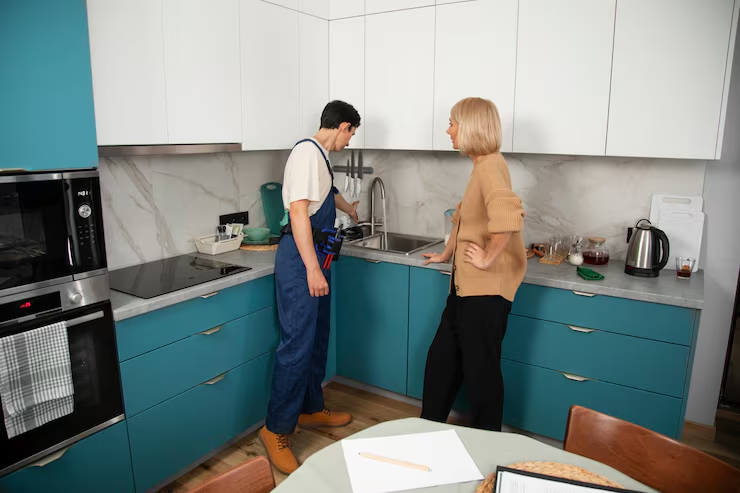

How to Pack Your Kitchen for a Move
Many homeowners believe the biggest kitchen packing challenge is simply finding enough boxes. While box quantities are important, the common pitfall is underestimating the sheer volume and variety of items requiring specialized care. This can lead to breakages, inefficient packing, and ultimately, a more stressful unpacking experience. The correct approach prioritizes organization, protection, and strategic packing to ensure everything arrives safely and is easy to reassemble in your new home. This guide outlines how to tackle your kitchen packing effectively, whether you’re using full service movers or managing parts of the process yourself.
The Foundation: Declutter and Categorize
Before a single box is opened, the most crucial step is a thorough declutter. Your kitchen likely holds duplicates, seldom-used gadgets, and items you simply don’t need anymore. Be ruthless. Donate, sell, or discard anything that doesn’t serve a purpose in your new kitchen. This not only reduces the volume you need to pack but also means you’re not paying to move items you’ll likely discard later. Once decluttered, categorize your remaining items. Grouping similar items – like all your glassware, all your pots and pans, all your dry goods, or all your small appliances – makes packing more efficient and unpacking significantly easier. Consider how you’ll want to set up your new kitchen to inform these categories; for example, group baking supplies together.
Protecting Your Valuables and Fragile Items
Kitchens are filled with breakable items. Proper protection is non-negotiable. For dishes, avoid stacking them flat if possible. Instead, pack them vertically on their edges, using plenty of cushioning material like packing paper or bubble wrap. Wrap each item individually before placing it in the box. Use small, sturdy boxes for heavier items like plates to prevent the bottom from collapsing. Glassware, cups, and mugs should also be wrapped individually and packed upright. Fill any empty spaces with more packing paper to prevent shifting during transit. For delicate items, consider using dish packs with built-in dividers, or create your own using crumpled paper. Appliances, especially those with glass components like blenders or coffee makers, should be cleaned, dried thoroughly, and packed in their original boxes if you still have them, or in sturdy boxes with ample padding.
Handling Pots, Pans, and Utensils
Pots and pans are often heavy and can scratch each other. Nesting them is a common method, but ensure you place a layer of protection, like a dish towel or paper, between each piece to prevent damage. For larger pots, you can even place smaller, protected items inside them to save space and provide additional cushioning. Utensils can be bundled together with rubber bands or placed in smaller boxes or bags. Drawer organizers can be packed as they are, provided they are not too heavy and the contents are secured.
Smart Packing for Dry Goods and Linens
For canned goods and other non-perishable food items, use sturdy boxes and pack them densely to prevent movement. Ensure lids are tightly sealed. It’s often best to pack these towards the bottom of the box. Consider purchasing a dedicated kitchen kit for your first few days in your new home, containing essentials like coffee, tea, basic spices, and a few easy meals, and pack this separately or clearly label it for easy access upon arrival. Kitchen linens, such as dishtowels, oven mitts, and tablecloths, can be used as additional padding for fragile items, or packed together in their own boxes or bags. They can also be used to fill empty spaces in boxes of heavier items.
The Process with Moving Providers
When you engage professional movers, their expertise comes into play with packing your kitchen. You can opt for roadway moving services that include packing, or a hybrid approach where you pack certain items and they handle the more delicate or heavy ones. When you choose a provider through our platform, you’ll find independent local companies skilled in residential and long-distance moving. They will assess the volume and type of items to be packed and recommend the most efficient and protective methods. They come equipped with the necessary materials, including specialized boxes, padding, and wrapping, to ensure your kitchen contents are secured for transport. For long distance moving companies near me, or anywhere else, clear communication about your expectations and any particularly valuable or fragile items is key. The provider will typically pack your kitchen last and unpack it first, if agreed upon, minimizing the time your most-used room is inaccessible.